Michigan Bankruptcy
Exemption Calculator
See what property you can protect in a Michigan bankruptcy — homestead, vehicle, personal property exemptions.
Estimate your Michigan Bankruptcy Exemption
See what property you can protect in a Michigan bankruptcy — homestead, vehicle, personal property exemptions.
Data sourced from Michigan statutes and court fee schedules.
Important: This tool provides educational estimates only — not legal advice. Made For Law is not a law firm and is not affiliated with, endorsed by, or connected to any federal, state, county, or local government agency or court system. Calculator results are based on statutory formulas and publicly available fee schedules — not AI. Supporting content is AI-assisted and editorially reviewed. Results may not reflect recent legislative changes or your specific circumstances. Do not rely solely on these estimates — always verify with official sources and consult a licensed attorney before making legal or financial decisions. Full disclaimer
Michigan bankruptcy exemptions include a $46,125 homestead exemption. Michigan exemptions are governed by MCL § 700.3719.
Key Takeaways
- Homestead exemption: $30,000 ($45,000 for joint filers; $52,925 for 65+/disabled)
- Michigan allows choice between state and federal exemptions
- Wildcard: $1,675 plus up to $15,800 of unused homestead (federal option)
- Retirement accounts (401k, pensions) are fully protected; IRAs exempt up to $1,711,975
Key facts for Michigan bankruptcy exemption
What drives bankruptcy exemption in Michigan
Bankruptcy Exemptions in Michigan
Michigan allows debtors to choose between the state exemption scheme and the federal bankruptcy exemptions under 11 U.S.C. §522(d).
Bankruptcy exemptions determine which assets you can keep when filing Chapter 7 bankruptcy or how much equity is protected in Chapter 13. The specific dollar limits in Michigan directly determine whether a Chapter 7 trustee can liquidate your home, car, or savings — and how much unsecured creditors must receive in a Chapter 13 plan.
Exemptions protect specific categories of property up to defined dollar limits: your home (homestead), vehicles, personal belongings, wages, retirement accounts, and tools needed for your occupation. If the equity in an asset exceeds the applicable exemption, a Chapter 7 trustee may sell the asset, pay you the exempt amount, and distribute the remainder to creditors.
In Chapter 13, exemptions determine the minimum amount your repayment plan must pay unsecured creditors.
Michigan's exemption amounts can differ substantially from neighboring states and from the federal baseline. The exemption amounts in Michigan fall in the mid-range nationally, offering moderate protection for homeowners and personal property.
These amounts are periodically adjusted, so confirming the current figures with a bankruptcy attorney before filing is essential.
- Michigan exemption statutes are found at MCL §§ 600.5451 et seq. (state) or 11 U.S.C. § 522(d) (federal). Michigan has NOT opted out of federal exemptions — filers choose. The federal system's $15,075 wildcard is commonly preferred for Michigan filers without significant home equity. Non-obvious Michigan state exemptions include: a burial plot (exempt)
- professionally prescribed health aids (fully exempt)
- life insurance proceeds (exempt if paid to a surviving spouse or dependent)
- and disability insurance benefits (fully exempt). Michigan also recognizes tenancy by the entirety — marital real property is fully protected from the individual creditors of one spouse, regardless of value. For married Michigan homeowners with one high-liability spouse, tenancy by the entirety provides far greater protection than the state's $46,125 homestead exemption alone.
Michigan Bankruptcy Exemption Calculator Inputs
Use this Michigan bankruptcy exemption calculator to check whether home equity, vehicle equity, household goods, cash, wages, tools of the trade, retirement accounts, and public benefits are protected before filing Chapter 7 or Chapter 13. The important number is equity, not total asset value: subtract loans, liens, and valid security interests from the asset's fair market value before comparing it with the exemption.
- For Michigan, the core exemption inputs are the homestead exemption ($30,000 ($45,000 for joint filers
- $52,925 for 65+/disabled)), vehicle exemption ($5,025 (federal option)), wildcard exemption ($1,675 plus up to $15,800 of unused homestead (federal option)), tools of trade exemption ($3,175 (federal option)), and wage protection (60% of household earnings exempt (head of household)). If Michigan allows both state and federal exemptions, compare both systems before filing
- if Michigan has opted out, state exemptions control and federal exemptions generally cannot be mixed in.
The calculator is a screening tool, not a filing decision. Asset protection can change based on marital status, tenancy by the entirety, how long you have lived in Michigan, recent transfers, tax refunds, pending injury claims, and whether you file individually or jointly with a spouse.
Review the output with a bankruptcy attorney before selling assets, paying relatives, transferring title, or spending down cash.

Michigan Homestead Exemption
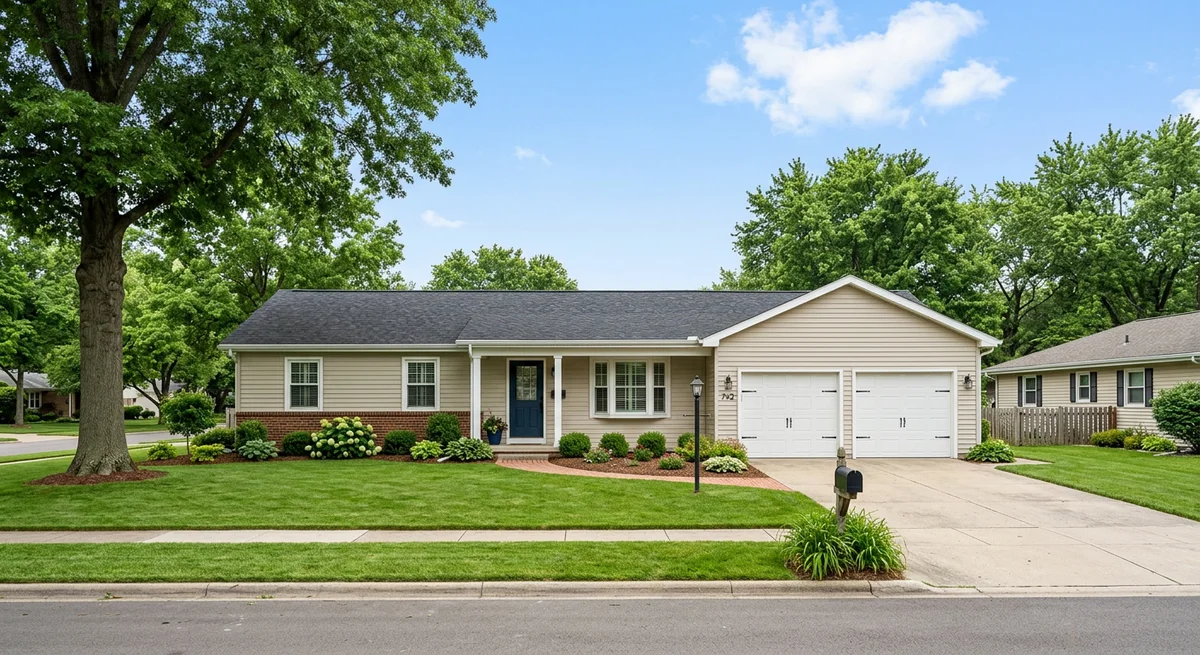
The homestead exemption in Michigan protects $30,000 ($45,000 for joint filers; $52,925 for 65+/disabled) of equity in your primary residence from creditors in bankruptcy. Michigan allows federal exemptions as alternative.
Must be primary residence up to 40 acres rural or 1 lot urban.
If your home equity exceeds the Michigan homestead exemption, a Chapter 7 trustee could sell your home, pay you the exempt amount, and distribute the surplus to creditors. In this situation, Chapter 13 may be a better option — it allows you to keep your home while repaying creditors over 3–5 years, as long as your plan pays unsecured creditors at least what they would have received in Chapter 7.
Under the Bankruptcy Abuse Prevention and Consumer Protection Act of 2005 (BAPCPA), debtors who acquired their homestead within 1,215 days (about 3.3 years) before filing are limited to a $201,050 homestead exemption regardless of state law. This federal cap prevents debtors from moving to states with generous homestead exemptions shortly before filing.
Additionally, if a debtor has been convicted of securities violations or certain felonies, the homestead exemption may be further limited.
Vehicle and Personal Property Exemptions in Michigan
Michigan allows a motor vehicle exemption of $5,025 (federal option). This protects equity in your vehicle — not the vehicle's full value.
If you owe $15,000 on a car worth $20,000, your equity is $5,000. If your vehicle equity is within the exemption amount, you keep the car.
If it exceeds the exemption, the trustee may sell the vehicle, pay off the loan, pay you the exempt amount, and distribute the rest to creditors.
For personal property, Michigan provides the following protections: $700 per item household goods; $2,125 jewelry (federal option). These exemptions cover essential household items such as furniture, appliances, clothing, and similar necessities.
In practice, Chapter 7 trustees rarely seize ordinary household goods because the cost of seizure and sale typically exceeds the resale value. However, high-value items like art collections, antiques, or designer goods may attract trustee attention.
Tools of the trade — equipment, instruments, and supplies needed for your occupation — are protected up to $3,175 (federal option) in Michigan. This exemption is critical for self-employed individuals, tradespeople, and professionals whose livelihood depends on specialized equipment.
The exemption typically covers hand tools, machinery, professional libraries, office equipment, and similar items directly used in your work.
Ready to calculate?
Get a free Michigan estimate using actual statutory data.
Wildcard and Flexible Exemptions in Michigan
The wildcard exemption in Michigan allows you to protect $1,675 plus up to $15,800 of unused homestead (federal option) of equity in any property of your choosing. This is one of the most flexible tools in bankruptcy planning because it can be applied to any asset — cash, tax reimbursements, bank accounts, a second vehicle, equity above the homestead limit, or any other property that doesn't fit neatly into another exemption category.
Because Michigan allows debtors to choose federal exemptions, you have additional flexibility. The federal wildcard exemption is $1,475 plus up to $13,950 of any unused portion of the federal homestead exemption — potentially creating a wildcard of up to $15,425.
For renters or debtors with little home equity, the federal exemption set often provides significantly more protection than state exemptions.
Married couples filing jointly may be able to double exemption amounts (called "stacking") depending on Michigan law. In some states, each spouse can claim the full exemption amount, effectively doubling protection.
In others, the exemption amounts are per-household rather than per-person. A bankruptcy attorney can advise whether doubling is available for your specific situation in Michigan.

Retirement Account and Wage Protections in Michigan
Retirement accounts receive strong protection in Michigan bankruptcy cases. ERISA-qualified plans — including 401(k), 403(b), profit-sharing plans, and defined benefit pensions — are fully exempt from creditor claims under both federal and state law with no dollar cap.
This is one of the most powerful protections available to bankruptcy filers.
Traditional and Roth IRAs are exempt up to $1,711,975 (as of 2024, adjusted every 3 years) under 11 U.S.C. §522(n).
This federal cap applies regardless of state exemption choices. SEP-IRAs and SIMPLE IRAs that receive only employer contributions are treated like ERISA plans and receive unlimited protection.
Inherited IRAs, however, are NOT protected in bankruptcy following the Supreme Court's decision in Clark v. Rameker (2014).
Wage protection in Michigan: 60% of household earnings exempt (head of household). This exemption protects your paycheck from garnishment by the bankruptcy trustee and general creditors.
The wage exemption typically applies to earned but unpaid wages, meaning money you have already earned but not yet received. Once wages are deposited into a bank account, they may lose their exempt status unless you can trace them.
Public benefits are also protected: Unemployment, workers' comp, Social Security, public assistance exempt.
Strategies for Maximizing Michigan Bankruptcy Exemptions
Pre-bankruptcy planning in Michigan involves legally structuring your assets to maximize the protection offered by available exemptions. Because Michigan allows you to choose between state and federal exemptions, the first critical decision is which set provides better overall coverage.
Renters and debtors without significant home equity often benefit from federal exemptions due to the larger wildcard. Homeowners with substantial equity may benefit from state exemptions if the state homestead exceeds the federal amount.
Common legitimate pre-bankruptcy strategies include: paying down a mortgage to increase protected home equity (where the homestead exemption allows it), contributing to retirement accounts (which are fully protected), converting non-exempt assets to exempt forms (such as using cash to prepay exempt insurance policies), and repairing or maintaining exempt property like your vehicle or home. These conversions must be done in good faith and well in advance of filing.
Courts scrutinize large asset conversions made shortly before bankruptcy as potential fraud.
Timing matters significantly. Federal law imposes a means test for Chapter 7 eligibility, and income is measured over the 6 months before filing.
Strategic timing of your filing date can affect which income months are counted, whether seasonal bonuses push you over the means test threshold, and how tax reimbursements are treated. Consulting with a Michigan bankruptcy attorney 3–6 months before filing allows time to implement legitimate planning strategies.
Related Bankruptcy Tools for Michigan
Bankruptcy exemptions are one piece of a larger financial picture. The Michigan Chapter 7 Means Test Calculator determines whether your income qualifies you for Chapter 7 discharge.
If you don't qualify for Chapter 7, the Michigan Chapter 13 Payment Plan Calculator estimates your monthly repayment plan. And if your home equity is at stake, the Michigan Homestead Exemption Calculator breaks down exactly how much equity is protected under Michigan law.

Questions families ask about Michigan bankruptcy exemption
Edited and reviewed by our editorial team. Answers are general information — not legal advice.
Can I choose federal bankruptcy exemptions in Michigan?
Yes. Michigan allows debtors to choose either state exemptions or federal exemptions under 11 U.S.C. §522(d). You cannot mix and match — you must choose one complete set.
What is the homestead exemption in Michigan?
Michigan's homestead exemption protects $30,000 ($45,000 for joint filers; $52,925 for 65+/disabled) of equity in your primary residence. This amount represents the maximum equity you can protect.
Are retirement accounts protected in Michigan bankruptcy?
Yes. ERISA-qualified retirement accounts (401k, 403b, pensions) are fully exempt with no dollar cap. IRAs are protected up to $1,711,975 under federal law. However, inherited IRAs are NOT protected.
How much of my wages are protected?
In Michigan, 60% of household earnings exempt (head of household). Once wages are deposited into a bank account, they may lose exempt status unless traceable.
What is a wildcard exemption?
A wildcard exemption lets you protect equity in any property, regardless of category. In Michigan, the wildcard exemption is $1,675 plus up to $15,800 of unused homestead (federal option). This is especially useful for protecting bank account balances, tax reimbursements, or equity that exceeds other exemption limits.
Where can I find a bankruptcy attorney in Michigan?
The exemption analysis is highly fact-specific — small differences in how assets are held can determine whether they are protected. For a comprehensive overview of what property debtors can protect, see the United States Courts bankruptcy exemptions guide. Find a Michigan bankruptcy attorney to review your specific situation before filing.
User Reviews
No reviews yet. Be the first to rate this calculator!
Get bankruptcy exemption for your county
Bankruptcy Exemption Calculator in states that border Michigan
Key statutes: MCL § 700.3719
Sources
- Michigan Courts — federal bankruptcy court procedures and exemption claims
- Michigan Compiled Laws — Legislature — bankruptcy exemption statutes and federal vs. state opt-out rules
- State Bar of Michigan — bankruptcy attorney resources and directory
Bankruptcy Exemption Calculator in other states
Legal professional? Learn about our tools for legal professionals
Run your Michigan bankruptcy exemption estimate in under a minute.
Free. No signup. Reviewed by our editorial team and sourced to Michigan statutes and fee schedules.
Open the calculatorLegal information, not legal advice. The Bankruptcy Exemption Calculator for Michigan produces estimates based on public fee schedules and state statutes. Actual costs vary by case. For advice about your situation, consult a licensed Michigan attorney.