Divorce Cost Estimator for Buffalo County, South Dakota
- County Seat
- Gann Valley
- Filing Fee
- $95
- Population
- 2,053
- Population Tier
- very rural
Estimate Your Divorce Costs in Buffalo County
Get a free estimate based on South Dakota's actual filing fees, typical attorney costs, and your specific situation.
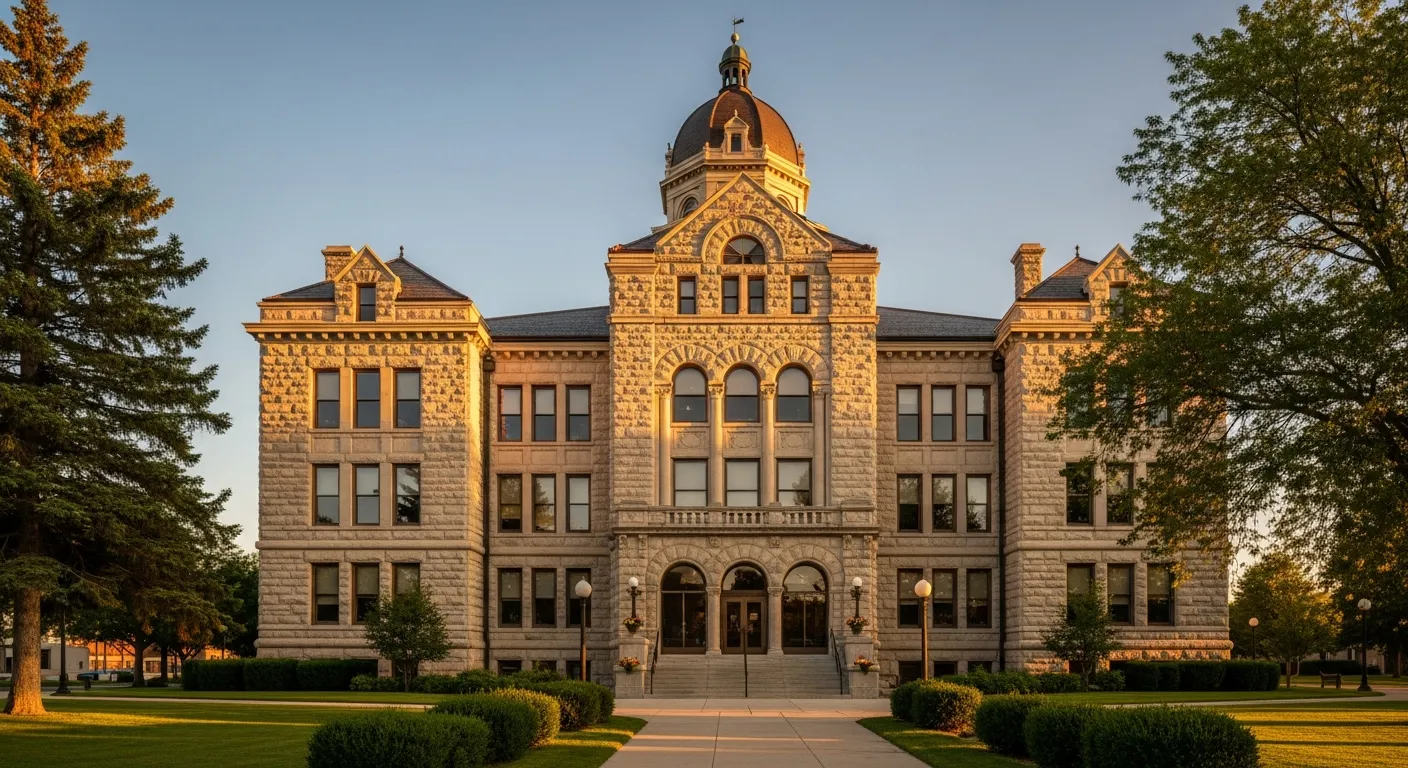
Divorce Costs in Buffalo County, South Dakota
The Buffalo County Circuit Court in Gann Valley handles all divorce proceedings for Buffalo County, South Dakota. Filing fees start at $95, but total costs range from a few hundred dollars for a simple uncontested case to $15,000 or more when disputes require litigation.
For the full South Dakota divorce cost breakdown, see our [South Dakota Divorce Cost Estimator](/divorce-cost-estimator/south-dakota).
Buffalo County is a very small jurisdiction where the Buffalo County Circuit Court handles family law alongside other civil matters. You may find fewer local family law attorneys, which can mean either traveling to a larger city for representation or working with a general practitioner. The trade-off is often a less congested court docket and more flexible scheduling.
South Dakota follows equitable distribution of marital property under SDCL § 25-4-44, with courts considering factors including the duration of marriage, value of property, and each party's earning capacity. The no-fault ground is "irreconcilable differences" under § 25-4-2. South Dakota has no mandatory waiting period and no mandatory mediation requirement, though courts may order mediation at their discretion. Agricultural property division — particularly involving ranch land and livestock operations — is a common complexity.
South Dakota divorce law is governed by SDCL Chapter 25-4. The no-fault ground for divorce is codified in SDCL § 25-4-2(7) (irreconcilable differences — no-fault ground). Residency requirements under SDCL § 25-4-30 (residency at time of filing; no minimum duration specified) must be met before filing, and SDCL § 25-4-34 (no mandatory waiting period). The divorce cost estimator below uses South Dakota's actual filing fee data to help you project your total expenses in Buffalo County.
Buffalo County Court Information
The Buffalo County Circuit Court is located at PO Box 174, Gann Valley SD 57341. The court clerk can be reached at (605) 293-3234.
Visit the court's website for current forms, fee schedules, and filing instructions.
Office hours: Mon–Fri 8:00 AM–5:00 PM.
Divorce Filing Fees in Buffalo County
The court filing fee to initiate a divorce in South Dakota is a flat $95 (see SDCL § 16-2-29), which applies uniformly across all counties including Buffalo County. This fee is paid when you file your petition for dissolution of marriage at the Buffalo County Circuit Court in Gann Valley and is not reimbursable regardless of the outcome of your case.
Beyond the initial filing fee, expect additional court costs in Buffalo County: service of process fees ($30–$100 for personal service by a sheriff or process server), motion filing fees for any contested issues, and fees for certified copies of the final decree. If your case involves children, South Dakota may require completion of a mandatory parenting class ($25–$75) before the court will finalize the divorce.
South Dakota's filing fees are set by SDCL § 16-2-29 and are uniform across all 66 counties. South Dakota's circuit courts handle divorce filings. The state has no mandatory waiting period, so uncontested divorces can be finalized relatively quickly. South Dakota's Unified Judicial System provides free divorce forms and instructions through its website.
If you cannot afford the filing fee, the Buffalo County Circuit Court may grant a fee waiver. You'll need to file an application demonstrating financial hardship — typically showing income below 150% of the federal poverty level. Fee waivers cover the initial filing fee and may also waive service of process costs.

Contested vs. Uncontested Divorce in Buffalo County
An uncontested divorce in Buffalo County — where both spouses agree on all terms including property division, custody, and support — is significantly cheaper than a contested one. Total costs for an uncontested divorce typically range from $95 (self-represented, filing fee only) to $1,500–$3,500 with a flat-fee attorney handling the paperwork and court appearances. Many couples in Buffalo County complete an uncontested divorce in 2–4 months.
Contested divorces in Buffalo County can still be expensive, typically $5,000–$20,000 per spouse, though attorney rates in very rural areas tend to be lower ($150–$275/hour) than in the state's metropolitan centers. Cases involving farm or ranch property, family businesses, or custody disputes can push costs higher. The Buffalo County Circuit Court's lighter docket may allow faster resolution than in busier jurisdictions.
About 95% of divorce cases nationwide settle before trial, and this holds true in Buffalo County. Even cases that start as contested often reach agreement through negotiation or mediation. Starting with a realistic cost estimate helps you make informed decisions about when to negotiate and when to litigate.
Mediation and Alternatives in Buffalo County
Mediation is one of the most cost-effective ways to resolve divorce disputes in Buffalo County. A trained mediator helps both spouses negotiate custody arrangements, property division, and support terms. In the Gann Valley area, mediation typically costs $3,000–$7,000 total (split between both parties) and resolves most issues in 2–5 sessions. Many South Dakota courts require or strongly encourage mediation before allowing contested issues to proceed to trial.
In Buffalo County, mediation options may be more limited than in the state's larger cities, but many mediators offer virtual sessions that make the service accessible regardless of location. The Buffalo County Circuit Court may also provide referrals to approved mediators or offer court-connected mediation programs at reduced rates.
South Dakota courts may order mediation in contested divorce cases, though the state has no statutory mandate for family mediation. Many South Dakota attorneys are trained in mediation and offer it as part of their family law practice. The Unified Judicial System provides referrals to qualified mediators, and some circuits have established ADR programs with reduced-cost mediation for qualifying families.
Collaborative divorce is another alternative available in South Dakota. In this process, each spouse hires a collaborative attorney, and all parties agree to resolve issues without going to court. While more expensive than mediation alone ($5,000–$15,000 per spouse), collaborative divorce is typically less costly and less adversarial than traditional litigation, and it keeps the decision-making power with the couple rather than a judge.
Attorney Fees for Divorce in Buffalo County
Family law attorney rates in Buffalo County tend to be lower than in the state's urban centers, typically $150–$275 per hour. Flat-fee arrangements for uncontested divorces are often available ($800–$2,000). The trade-off is a smaller pool of family law specialists — you may need to work with a general practice attorney or travel to a nearby city for specialized representation. Total attorney costs for contested cases typically range from $3,000 to $12,000.
When hiring a divorce attorney in Buffalo County, ask about their billing practices: hourly rate, retainer amount, whether the retainer is reimbursable, how often you'll receive invoices, and whether paralegal time is billed separately (typically at $75–$150/hour). Also ask about their experience with the Buffalo County Circuit Court specifically — familiarity with local judges, court staff, and procedures can meaningfully affect both cost and outcome.
If you cannot afford an attorney, South Dakota legal aid organizations may provide free or low-cost representation for qualifying individuals. The Buffalo County bar association may also offer a lawyer referral service with reduced-fee initial consultations. Many Gann Valley-area attorneys offer payment plans for divorce cases.
South Dakota Divorce Law Overview
For a complete breakdown of South Dakota divorce rules, filing fees, residency requirements, waiting periods, and property division procedures, see our [South Dakota Divorce Cost Estimator](/divorce-cost-estimator/south-dakota).
Legal professional? Learn about our tools for law firms
User Reviews
No reviews yet. Be the first to rate this calculator!
Need family-law advice in Buffalo County? Contact a licensed attorney serving Gann Valley and the surrounding area before relying on an estimate for filing or settlement decisions.
Official South Dakota Divorce Resources
- South Dakota Unified Judicial System→Official state court system
- State Bar of South Dakota — Lawyer Search→Find a licensed attorney
- South Dakota Divorce Law — SDCL Chapter 25-4→Read the full statute text
Important: This tool provides educational estimates only — not legal advice. Made For Law is not a law firm and is not affiliated with, endorsed by, or connected to any federal, state, county, or local government agency or court system. Calculator results are based on statutory formulas and publicly available fee schedules — not AI. Supporting content is AI-assisted and editorially reviewed. Results may not reflect recent legislative changes or your specific circumstances. Do not rely solely on these estimates — always verify with official sources and consult a licensed attorney before making legal or financial decisions. Full disclaimer