

The Student Loan Exception to Discharge
Under 11 U.S.C. § 523(a)(8), student loans are generally non-dischargeable unless you can prove "undue hardship" — the single biggest exception in the entire bankruptcy code. The Federal Student Aid office publishes current guidance on federal-loan discharge in bankruptcy. The rule applies to both federal and private loans, plus most educational benefit obligations. For context: roughly 45 million Americans owe more than $1.7 trillion collectively in student debt (per Federal Reserve data), and this one clause is why so few can touch it in bankruptcy.
To be fair, the undue hardship standard has historically been interpreted very strictly. For decades, many bankruptcy attorneys advised clients that student loans were essentially impossible to discharge. While that perception was always somewhat overstated — courts do grant student loan discharges in cases of genuine hardship — the bar has been extremely high. However, recent developments in case law and Department of Justice guidance are beginning to change how these cases are handled.
If you are considering bankruptcy and have significant student loan debt, it is important to understand both the current legal framework and the evolving trends. Even if full discharge isn't available, bankruptcy can still help by eliminating your other debts (credit cards, medical bills) and freeing up income to manage student loan payments more comfortably.
The Brunner Test: The Three-Prong Standard
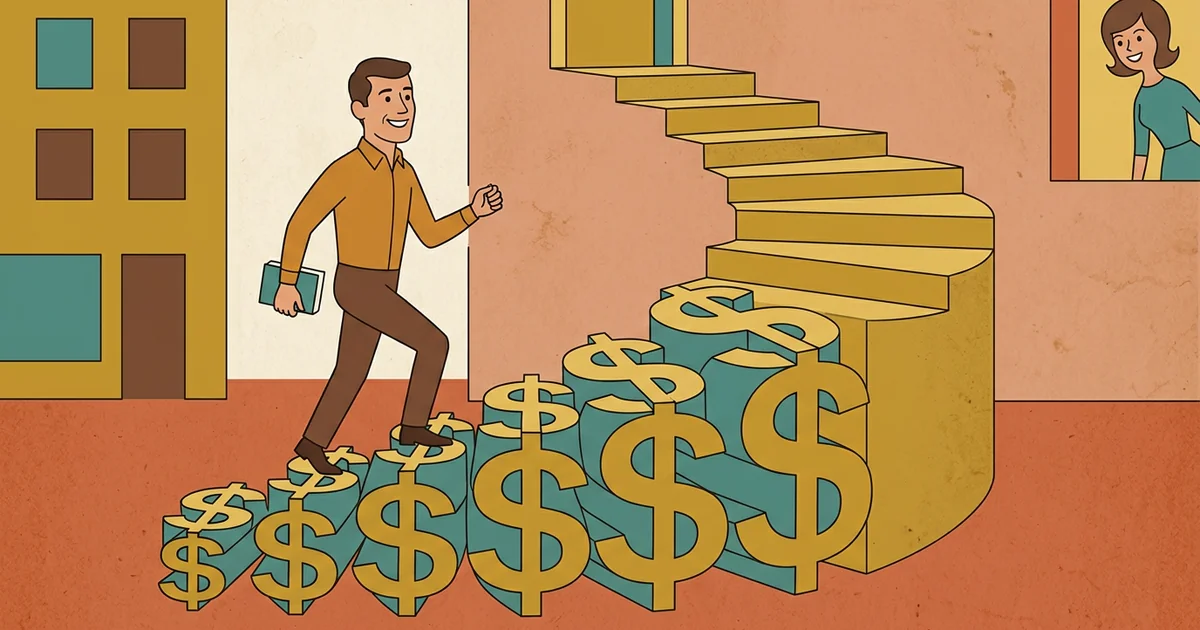
The most widely used standard for student loan discharge is the Brunner test, established by the Second Circuit in Brunner v. New York State Higher Education Services Corp. (1987). To discharge student loans under Brunner, you must prove all three of the following: (1) based on your current income and expenses, you can't maintain a minimal standard of living if forced to repay the loans; (2) additional circumstances exist indicating that this state of affairs is likely to persist for a significant portion of the repayment period; and (3) you have made good-faith efforts to repay the loans.
The second prong — the "additional circumstances" requirement — has traditionally been the most difficult to satisfy. Courts have required something beyond ordinary financial difficulty: a chronic illness or disability, an inability to work due to age, a complete lack of job prospects despite education and effort, or similar circumstances suggesting that the debtor's situation won't improve. Simply being unable to afford payments due to low income has often been deemed insufficient.
The third prong — good faith — generally requires showing that you attempted to make payments, explored income-driven repayment plans, and didn't file bankruptcy simply to avoid student loan obligations. Courts look at your payment history, whether you applied for deferments or forbearances, and whether you filed for bankruptcy shortly after the loans became due or only after years of struggling to repay.
The Totality-of-Circumstances Test: A More Flexible Standard
The Eighth Circuit uses a different, more flexible standard known as the totality-of-circumstances test, established in Long v. Educational Credit Management Corp. (2003). Instead of requiring the debtor to satisfy three rigid prongs, this test directs courts to consider the debtor's overall financial situation, including past, present, and reasonably reliable future financial resources; the debtor's and any dependents' reasonable living expenses; and any other relevant factors.
The totality-of-circumstances test is generally considered more favorable to debtors because it allows courts to exercise broader discretion. A debtor who might fail one prong of the strict Brunner test could still obtain discharge under the totality approach if the court finds that the overall picture supports it. The First Circuit has also adopted elements of this more flexible approach.
Regardless of which test applies in your circuit, the undue hardship determination requires filing an adversary proceeding — a separate lawsuit within your bankruptcy case. This involves drafting a complaint, serving the loan servicer, conducting discovery, and potentially going to trial. The process adds cost and complexity to the bankruptcy, which is why it is typically pursued only when the student loan debt is substantial and the debtor's circumstances are genuinely dire.

The 2022 DOJ Guidance: A Potential Game Changer
In November 2022, the Department of Justice and the Department of Education issued new guidance directing government attorneys to apply a more consistent and less adversarial approach to student loan discharge requests in bankruptcy. The guidance introduced a standardized process and attestation form that DOJ attorneys use to evaluate whether to contest a debtor's claim of undue hardship.
Under this guidance, the DOJ considers factors including the debtor's income relative to the federal poverty guidelines, whether the debtor has a disability or other barrier to increased earnings, whether the debtor's expenses are reasonable, and the debtor's overall financial trajectory. If the analysis supports discharge, DOJ attorneys are instructed not to oppose it — a significant departure from the previous practice of contesting virtually every student loan discharge request.
While this guidance applies only to federal student loans (private lender policies vary), it represents a meaningful shift. Early data suggests that more debtors are successfully discharging federal student loans since the guidance was issued. If you have federal student loans and are considering bankruptcy, the current environment may be more favorable than at any time in the past 30 years. Discuss the DOJ guidance with your bankruptcy attorney to assess whether an adversary proceeding is worth pursuing in your case.
Partial Discharge and Chapter 13 Treatment
Even when full discharge isn't available, bankruptcy courts can grant partial discharge of student loans — discharging a portion of the debt while requiring repayment of the remainder. Some courts have used this approach to reduce a debtor's student loan burden to a manageable level while acknowledging that the debtor has some ability to repay. Partial discharge is more commonly available under the totality-of-circumstances test than under the strict Brunner standard.
In Chapter 13 bankruptcy, student loans are treated as general unsecured claims (unless they are also entitled to priority status, which is rare). This means they receive whatever percentage your plan pays to unsecured creditors — which may be as little as 0%. While the remaining balance isn't discharged at the end of the plan (unlike credit cards and medical bills), the three-to-five-year period of reduced or zero payments can provide significant breathing room, particularly if combined with income-driven repayment plan enrollment after the plan ends.
A strategic approach for borrowers with both student loan and non-student-loan debt may be: file Chapter 7 to discharge all non-student-loan unsecured debt, then use the freed-up income to manage student loan payments through an income-driven repayment plan (such as SAVE, PAYE, or IBR). This combination can dramatically reduce your total monthly debt payments without requiring student loan discharge. Our Chapter 7 Means Test Calculator can help you determine if this approach is available to you.

Private Student Loans: Different Rules, Evolving Law
Private student loans — those from banks, credit unions, and online lenders rather than the federal government — are also non-dischargeable under 11 U.S.C. § 523(a)(8), but the law is more nuanced. The 2022 DOJ guidance doesn't apply to private loans, as the government isn't a party. However, private lenders must still defend against discharge in court, and some are less aggressive than the federal government has historically been.
A growing body of case law is also questioning whether all private student loans qualify for the § 523(a)(8) exception. The statute's language covers "educational benefit overpayments" and loans made or assured by governmental units, as well as "qualified education loans" as defined in the Internal Revenue Code. Some courts have found that private loans that do not meet these definitions — particularly loans from non-traditional lenders or for non-qualified educational expenses — may be dischargeable without proving undue hardship.
If you have private student loans, ask your bankruptcy attorney whether your specific loans fall within the § 523(a)(8) exception. Depending on the lender, the loan terms, and the educational institution involved, there may be an argument that your private loans are treated as ordinary unsecured debt and can be discharged in Chapter 7 without any special showing. This is an evolving area of law with results varying significantly by jurisdiction.
Should You File an Adversary Proceeding?
The decision to pursue student loan discharge through an adversary proceeding depends on the size of your debt, the strength of your case, and the cost of litigation. Adversary proceedings can add $2,000 to $5,000 or more in attorney fees to a bankruptcy filing. For borrowers with $20,000 in student loans and some prospect of increased earnings, the cost-benefit analysis may not favor litigation. For borrowers with $100,000+ in student loans and a permanent disability or other qualifying hardship, the potential benefit is substantial.
Factors that strengthen a discharge case include: physical or mental disability documented by medical professionals, age (particularly if near retirement), multiple years of good-faith repayment attempts, income consistently below the federal poverty guidelines, and dependents who increase your necessary living expenses. Factors that weaken a case include: a recent degree in a high-earning field, youth with a long remaining work life, failure to explore income-driven repayment options, and income above median levels.
Talk to a bankruptcy attorney who has experience with student loan adversary proceedings in your district. The law is changing, and what was impossible five years ago may be achievable today. Even if full discharge is unlikely, the threat of litigation sometimes motivates federal servicers and private lenders to negotiate settlements or payment arrangements outside of bankruptcy. For an initial assessment of your overall financial situation, use our Debt-to-Income Ratio Calculator.

Disclaimer: This article is for general educational purposes only and does not constitute legal advice. Made For Law is not a law firm, and our team are not attorneys. We are not affiliated with any federal, state, county, or local government agency or court system. Content may be researched or drafted with AI assistance and is reviewed by our editorial team before publication. Laws change frequently — always verify information with official sources and consult a licensed attorney for advice specific to your situation. Full disclaimer
- 11 U.S.C. § 523(a)(8)law.cornell.edu
- Federal Student Aid officestudentaid.gov

Our editorial team researches and summarizes publicly available legal information. We are not attorneys and do not provide legal advice. Every article is checked against current state statutes and official sources, but you should always consult a licensed attorney for guidance specific to your situation.