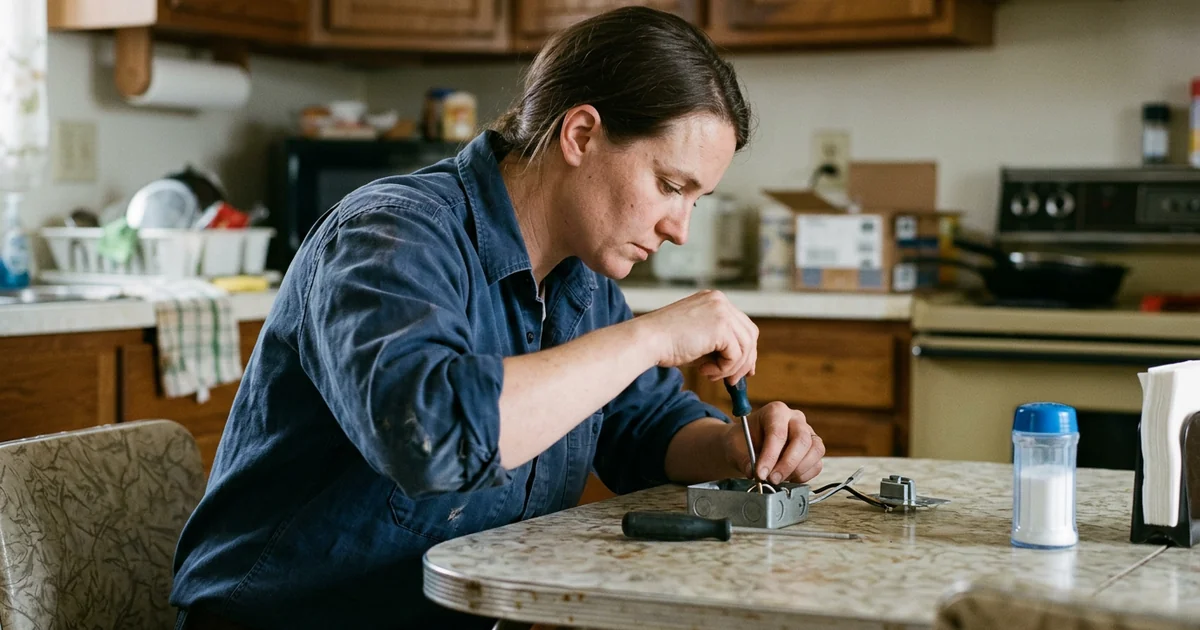

Can You File for Divorce Without an Attorney?
Yes — filing pro se (Latin for "for oneself") is legal in every state, and for a simple uncontested case with no kids and no retirement accounts, you can wrap the whole thing for the filing fee alone — $100–$500 depending on your state. California, Texas, and Florida all publish official self-help forms free on the court website. That's the best-case setup. Any of these: children, a 401(k), a house, a small business — and the $300-$500 you'd pay an attorney to review your settlement is the highest-ROI check in the process.
Filing without an attorney works best for short marriages with no children, minimal assets and debts, when both spouses agree on all terms (an uncontested divorce), and when neither spouse is seeking alimony. If your case involves children, substantial property, retirement accounts, or a business, the cost of a lawyer is usually justified by the protection they provide.
The cost savings can be significant. While a divorce with an attorney typically costs $1,500 to $5,000 for an uncontested case, filing on your own reduces the cost to just the court filing fees—typically $100 to $500. For the full cost breakdown, see our Complete Guide to Divorce Costs in 2026.

Step 1: Check Residency Requirements
Before you can file, you must meet your state's residency requirement. Most states require that at least one spouse has been a resident for a minimum period—typically three to twelve months.
California requires six months of state residency and three months of county residency under California Family Code §2320. Texas requires six months of state residency and 90 days of county residency under Texas Family Code §6.301.
Florida requires six months of state residency under Florida Statute §61.021. New York requires one year of residency under certain grounds under New York Domestic Relations Law §230.
If you recently moved to a new state, you may need to wait before filing. Alternatively, you can file in the state where your spouse resides if that state's requirements are met. Some states like Nevada have shorter residency requirements (six weeks).
Step 2: Obtain and Complete the Forms
Every state provides official divorce forms, usually available for free on the state court system's website. The primary form is the Petition for Dissolution of Marriage. You will also need a Summons, financial disclosure forms, and—if you have children—child custody and support forms.
Court self-help centers can provide the forms and instructions. The United States Courts website provides links to every state court system.
Many states also have interactive online form-completion tools. California's self-help website at courts.ca.gov/selfhelp is one of the most detailed self-help resources.
Complete the forms carefully and honestly. The petition typically requires names, addresses, dates of birth, the date of marriage and separation, information about minor children, a description of marital property and debts, and a statement of the relief you are requesting. If you have already agreed on all terms, you will also need a Marital Settlement Agreement.

Step 3: File and Serve the Papers
Take your completed forms to the court clerk's office in the appropriate county. Pay the filing fee (or submit a fee waiver request) and the clerk will stamp your documents and assign a case number. Many courts now offer electronic filing as well.
After filing, you must formally notify your spouse by "serving" the divorce papers. Most states require personal service—delivery by a sheriff, process server, or other authorized person.
Some states allow service by certified mail for uncontested divorces. You cannot serve the papers yourself. Service costs range from $25 to $150.
Your spouse then has a deadline to respond—typically 20 to 30 days. If your spouse agrees and files a response, the case proceeds as uncontested. If your spouse does not respond, you can request a default judgment.
Step 4: Complete Required Disclosures and Waiting Periods
Most states require both spouses to exchange financial disclosures, even in an uncontested divorce. These typically include income information, a list of all assets and debts, and monthly expense statements. In California, the Preliminary Declaration of Disclosure is mandatory under California Family Code §2104.
Many states impose a mandatory waiting period. California's six-month waiting period is the longest.
Texas requires 60 days. Florida requires only 20 days. Some states have no waiting period if all requirements are met.
If you have children, many states require both parents to complete a parenting education course. These cover the impact of divorce on children and are usually available online for $25 to $100. See our guide on creating a parenting plan for help developing a custody arrangement.

Step 5: Finalize the Divorce
Once the waiting period has passed and all disclosures have been exchanged, submit your paperwork to the court for a final judgment. In many uncontested cases, the judge reviews the paperwork and signs the judgment without a hearing.
Obtain at least two certified copies of the final judgment—you will need them for name changes, beneficiary updates, and property transfers. Certified copies typically cost $5 to $25 each.
If you agreed to divide retirement accounts, you will need a QDRO in addition to the divorce decree. QDROs require professional preparation—even if you handled everything else pro se. QDRO preparation fees of $500 to $2,500 are a worthwhile investment.
Common Mistakes to Avoid
The most common mistake is failing to properly value and divide marital property. Many couples divide assets based on face value without considering tax consequences. A retirement account worth $200,000 is not equivalent to $200,000 in home equity because withdrawals from the retirement account will be taxed. Our Property Division Calculator can help you compare after-tax values.
Another common mistake is failing to address joint debt. Joint debts do not disappear because the divorce decree assigns them to one spouse.
If your ex-spouse fails to pay a joint debt, the creditor can still come after you. See our guide on divorce and your mortgage for specific advice.
Finally, many pro se filers fail to include important provisions in their settlement agreement—life insurance requirements, college expense provisions, or dispute resolution procedures. Even if you handle most of the divorce yourself, consider paying an attorney $300 to $500 to review your agreement. That small investment can prevent costly mistakes.
Disclaimer: This article is for general educational purposes only and does not constitute legal advice. Made For Law is not a law firm, and our team are not attorneys. We are not affiliated with any federal, state, county, or local government agency or court system. Content may be researched or drafted with AI assistance and is reviewed by our editorial team before publication. Laws change frequently — always verify information with official sources and consult a licensed attorney for advice specific to your situation. Full disclaimer
- California Family Code §2320leginfo.legislature.ca.gov
- Texas Family Code §6.301statutes.capitol.texas.gov
- Florida Statute §61.021leg.state.fl.us
- New York Domestic Relations Law §230nysenate.gov
- United States Courts websiteuscourts.gov
- courts.ca.gov/selfhelpcourts.ca.gov
- California Family Code §2104leginfo.legislature.ca.gov

Our editorial team researches and summarizes publicly available legal information. We are not attorneys and do not provide legal advice. Every article is checked against current state statutes and official sources, but you should always consult a licensed attorney for guidance specific to your situation.