Arizona Security Deposit
Return Calculator
Calculate security deposit limits and return deadlines under Arizona landlord-tenant law.
Estimate your Arizona Security Deposit Return
Calculate security deposit limits and return deadlines under Arizona landlord-tenant law.
Data sourced from Arizona statutes and court fee schedules.
Important: This tool provides educational estimates only — not legal advice. Made For Law is not a law firm and is not affiliated with, endorsed by, or connected to any federal, state, county, or local government agency or court system. Calculator results are based on statutory formulas and publicly available fee schedules — not AI. Supporting content is AI-assisted and editorially reviewed. Results may not reflect recent legislative changes or your specific circumstances. Do not rely solely on these estimates — always verify with official sources and consult a licensed attorney before making legal or financial decisions. Full disclaimer
Arizona security deposit laws set rules for maximum deposit amounts, allowable deductions, return deadlines, and penalties for non-compliance under A.R.S. § 14-3719. Landlords who fail to return deposits on time may owe statutory penalties.
Key Takeaways
- Maximum deposit: 1.5 months’ rent
- Return deadline: 14 days
- Interest required: No
- Penalty for violations: Tenant may recover up to double the deposit if landlord acts in bad faith
Key facts for Arizona security deposit return
What drives security deposit return in Arizona
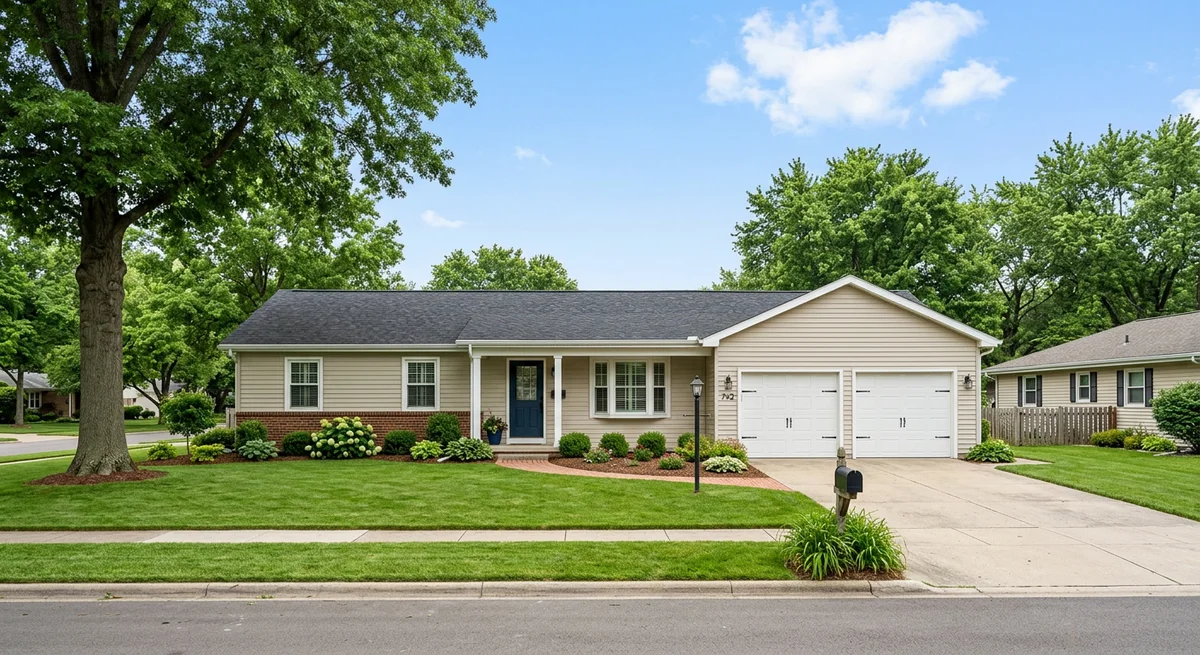
Security Deposit Laws in Arizona
Arizona limits security deposits to 1.5 months’ rent and requires landlords to return the deposit within 14 days after a tenant moves out. The state does not require landlords to pay interest on security deposits.
These rules are established by Ariz. Rev.
Stat. § 33-1321.
Landlords who miss the 14 days return window or make unsupported deductions face penalties: tenant may recover up to double the deposit if landlord acts in bad faith. Both tenants disputing withheld funds and landlords defending deductions benefit from knowing exactly what Arizona law allows and requires.
Arizona cities including Phoenix, Tucson, and Scottsdale are preempted from enacting rent control ordinances under A.R.S. § 33-1329 — state law governs security deposit rules uniformly.
Arizona's small claims limit is $3,500. Landlords in Arizona commonly attempt to deduct for professional carpet cleaning, but courts have found this impermissible when normal carpet wear exists after a typical tenancy length.
Arizona's move-in inspection checklist (A.R.S. § 33-1321(C)) provides that tenants who do not dispute a landlord-prepared checklist within 5 business days are deemed to have accepted the described condition — completing and returning this checklist within the deadline is essential for tenants.
Maximum Security Deposit in Arizona
Under Ariz. Rev.
Stat. § 33-1321, Arizona limits security deposits to 1.5 months’ rent.
This cap applies to the security deposit itself and typically does not include last month's rent, pet deposits, or other fees that may be collected separately under Arizona law. Landlords who collect more than the statutory maximum may be required to reimbursement the excess and could face additional penalties.
The deposit limit in Arizona is designed to prevent landlords from demanding excessive upfront payments that create barriers to housing access. For a rental with monthly rent of $1,500, the maximum security deposit under Arizona law would be calculated based on the 1.5 months’ rent formula.
Tenants should verify that the total amount collected at move-in does not exceed the statutory cap, and should request a receipt documenting the deposit amount, the date paid, and the account where the deposit is held.
Arizona tenants should be aware that security deposits are separate from other move-in costs. Application fees, pet fees, cleaning deposits, and last month's rent are distinct charges that may or may not be subject to separate regulations.
Read your lease carefully to understand exactly what each payment covers and whether it is reimbursable.

Deposit Return Deadline and Itemization in Arizona
Arizona law requires landlords to return security deposits within 14 days after the tenant vacates the rental unit. This deadline is strict — Arizona has one of the shortest return windows in the country, giving landlords very little time to inspect the property and process the return.
The clock typically starts when the tenant surrenders possession of the unit and returns all keys.
Along with the deposit (or any remaining balance after deductions), the landlord must provide an itemized written statement listing each deduction. Arizona law specifically requires this itemization, and failure to provide it within the statutory window can result in the landlord forfeiting the right to retain any portion of the deposit.
Each deduction must be documented — vague entries like "cleaning" or "damages" without specifics are generally insufficient.
To protect your rights as a tenant in Arizona, always provide your landlord with a forwarding address in writing when you move out. Some states require the forwarding address before the return deadline begins to run.
Take date-stamped photos or video of the unit at both move-in and move-out to document the property's condition. If the landlord fails to return the deposit or provide an itemization within 14 days, send a written demand letter via certified mail before pursuing legal action.
Allowable Deductions from Security Deposits in Arizona
Under Arizona law, landlords may deduct from the security deposit for the following: unpaid rent, damages beyond normal wear and tear, cleaning to restore to move-in condition. These deductions must be reasonable, documented, and itemized in the statement provided to the tenant.
Landlords cannot deduct for normal wear and tear — this is a critical distinction that is frequently disputed between landlords and tenants.
Normal wear and tear in Arizona generally includes minor scuffs on walls, worn carpet from everyday foot traffic, small nail holes from hanging pictures, faded paint due to sunlight exposure, and minor door or window wear. Damage beyond normal wear includes large holes in walls, stained or burned carpet, broken windows, unauthorized modifications, pet damage, and excessive filth requiring professional cleaning.
The line between wear and damage is not always clear, which is why move-in and move-out condition documentation is critical.
While Arizona does not require a formal walk-through inspection before move-out, tenants can request one. A pre-move-out inspection gives you the chance to fix any issues the landlord identifies, potentially saving deductions from your deposit.
Even without a formal requirement, conducting your own thorough inspection with date-stamped photos on the day you move out creates a strong evidence trail if you need to dispute deductions later.
Ready to calculate?
Get a free Arizona estimate using actual statutory data.
Interest Requirements and Escrow in Arizona
Arizona does not require landlords to pay interest on security deposits. No interest requirement.
This places Arizona in the majority — only 14 of 51 jurisdictions require deposit interest. While tenants do not earn interest on their deposits in Arizona, they still have full rights to the return of the principal amount, less any lawful deductions.
Even without an interest requirement, Arizona tenants should be aware that their deposit money is being held for the duration of the lease. This represents a real opportunity cost, particularly for larger deposits.
When negotiating a lease in Arizona, consider whether the deposit amount is reasonable relative to the monthly rent and whether any of the upfront costs can be reduced.
Arizona does not require landlords to hold security deposits in a separate or escrow account. This means a landlord may commingle the deposit with personal or business funds, which carries some risk for tenants if the landlord faces financial difficulties.
Approximately 16 jurisdictions require separate accounts for deposit funds. Arizona tenants may want to ask their landlord where the deposit is being held, even though disclosure is not always required by law.

Penalties for Security Deposit Violations in Arizona
The penalties for security deposit violations in Arizona are significant. Under Ariz.
Rev. Stat.
§ 33-1321: tenant may recover up to double the deposit if landlord acts in bad faith. These penalties apply when a landlord fails to return the deposit within the statutory deadline, makes improper deductions, or fails to provide the required itemized statement.
Arizona's double-damages provision means that a landlord who wrongfully withholds a $2,000 security deposit could owe $4,000 to the tenant, plus any attorney fees and court costs awarded. This penalty applies when the landlord's withholding is found to be willful or in bad faith — an honest mistake in calculating deductions may not trigger the penalty multiplier, but failing to return the deposit at all almost certainly will.
To pursue a security deposit claim in Arizona, tenants typically file in small claims court, which handles disputes up to a specified dollar amount without requiring an attorney. The process involves filing a complaint, paying a small filing fee, and presenting evidence at a hearing.
Key evidence includes the lease, proof of deposit payment, move-in and move-out photos, the landlord's itemized deductions statement (or lack thereof), and any correspondence about the deposit. Many Arizona courts also offer mediation services that can resolve deposit disputes faster than a full hearing.
Arizona Security Deposit Calculator Inputs
Use this Arizona security deposit calculator to estimate how much a landlord must return, whether the return is late, and whether penalties may apply. Enter the original deposit, any unpaid rent or utilities, documented repair costs, cleaning charges, the move-out date, and the date the landlord returned money or sent an itemized deduction statement.
For Arizona, the calculator applies the return deadline of 14 days, the maximum deposit rule of 1.5 months’ rent, and the penalty rule: tenant may recover up to double the deposit if landlord acts in bad faith. The result is strongest when the tenant has move-in photos, move-out photos, a lease, proof of payment, the forwarding address notice, and every deduction receipt the landlord provided.
A low-dollar dispute can still be worth pursuing when Arizona law allows double damages, treble damages, attorney fees, or forfeiture of deductions. Before filing in small claims court, send a written demand letter that states the deposit amount, the statutory deadline, the disputed deductions, and the exact refund requested.
Related Real Estate and Legal Tools for Arizona
Security deposit disputes are often part of a broader landlord-tenant conflict. If the dispute escalates to eviction, the Arizona Eviction Timeline Calculator shows notice periods and court timelines by cause of action.
For landlords buying rental property and evaluating upfront costs, the Arizona Closing Cost Estimator provides a detailed breakdown of purchase transaction fees. And for landlords structuring ownership in an LLC, the Arizona LLC Formation Cost Calculator covers state filing fees and registered agent costs.
If your security deposit dispute has become a larger landlord-tenant legal matter, find a Arizona tenant rights attorney.

User Reviews
No reviews yet. Be the first to rate this calculator!
Get security deposit return for your county
Security Deposit Return Calculator in states that border Arizona
Key statutes: A.R.S. § 14-3719
Sources
- Arizona Judicial Branch — civil court procedures for security deposit disputes
- Arizona Revised Statutes — Legislature — landlord-tenant statutes, deposit limits, and return deadlines
- State Bar of Arizona — tenant rights resources and attorney directory
Security Deposit Return Calculator in other states
Legal professional? Learn about our tools for legal professionals
Run your Arizona security deposit return estimate in under a minute.
Free. No signup. Reviewed by our editorial team and sourced to Arizona statutes and fee schedules.
Open the calculatorLegal information, not legal advice. The Security Deposit Return Calculator for Arizona produces estimates based on public fee schedules and state statutes. Actual costs vary by case. For advice about your situation, consult a licensed Arizona attorney.