
What a Child Custody Evaluation Is — and When a Court May Order One
A child custody evaluation is a court-ordered or stipulated assessment — performed by a licensed psychologist or, in some states, a licensed clinical social worker — that produces a written report and, often, a custody recommendation for the judge. In California, it's controlled by Family Code §3111 and Rule of Court 5.220.
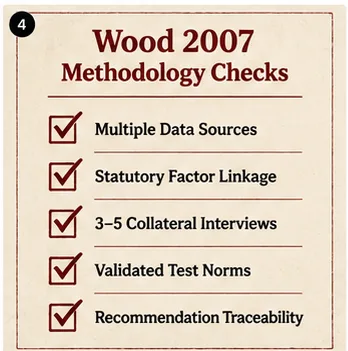
The judge can order one on their own motion, or either parent can request one — but the cost falls on the parents either way. Private-practice evaluators charge `$3,000–$15,000` depending on jurisdiction and complexity; court-appointed evaluators through family services typically run $1,000–$3,000 on a sliding scale.
Here's the thing — it's not therapy, it's not advice, and the evaluator is not your kid's advocate. They're collecting data for the court. Everything you say, every test you take, every text you forward — it ends up in the report.

Who Is the Custody Evaluator — Credentials That Actually Matter
Look for two credentials. First, a state psychology license — not a counseling license, not a social work license. Second, board certification from the American Board of Professional Psychology (ABPP) in either Forensic Psychology or Couple and Family Psychology.
ABPP forensic diplomate status is held by a small slice — fewer than 1,000 psychologists nationally. It signals peer-reviewed competence in the forensic role, which is different from clinical practice.
In California, evaluators must also complete the CRC 5.225 training — domestic violence, child development, and ethics modules. Most states have analogous requirements; ask your attorney to verify before the evaluation starts.

The Wood 2007 Framework — and Why It Still Matters
In 2007, Wood, Garb, Lilienfeld and Nezworski published a methodological critique of custody-eval practice that's still cited in cross-examinations today. Short version — they found that a meaningful percentage of evaluators were using instruments without validated custody-specific norms, and were drawing recommendations that exceeded what the data supported.
The framework matters because the inheritance of that critique — through MDPI, Springer, PLOS, and Cambridge citation chains — is what tells you whether the evaluator you've been assigned is following 2026-era best practice or 1990s habit.
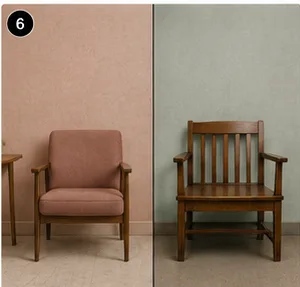
Specifically, the framework demands: (1) multiple data sources, not a single test battery, (2) explicit linkage of findings to the statutory factors in your state, and (3) collateral interviews with at least 3–5 sources who aren't the parents. If the evaluator skips any of those, your attorney has grounds to challenge the report under FRE 702.
The Test Battery — MMPI-2, PAI, Raven, MCMI-IV
Most evaluators use a stack of 3–5 instruments. The most common — the MMPI-2 or MMPI-2-RF, which screens for personality dysfunction and validity (the L, F, and K scales catch test-takers trying to look unusually good).
The Personality Assessment Inventory (PAI) is the second most common — it overlaps with the MMPI but reads at a lower grade level, so it's used when a parent has limited English or low reading ability. The MCMI-IV sometimes appears when the evaluator wants a personality-disorder lens.
Cognitive testing — usually Raven's Standard Progressive Matrices — gets added when capacity is in question. Raven is non-verbal and culture-light, which is why it's the instrument of choice in cross-cultural cases (Slovenian, Romanian, and Turkish norms exist alongside US norms). The catch — Raven was never normed specifically for custody disputes, so it's used as a general capacity screen, not a parenting test.
Honestly — none of these tests measure parenting. They measure personality and cognition. Anyone who tells you a high F-scale on the MMPI "proves" bad parenting is overreaching.
What the Custody Evaluation Report Contains
A standard report runs 40–80 pages. It includes: a referral question, methodology section, summary of each interview (you, the other parent, the kids, collateral sources), test results with interpretation, and a discussion section that ties findings to your state's best-interest factors.
Many — but not all — reports include a custody recommendation. The APA Specialty Guidelines for Forensic Psychology and the AFCC Model Standards are split on whether the evaluator should give a recommendation or just present findings — Tippins and Wittmann's 2005 paper made the case against recommendations and is still cited.
If the report contains a recommendation, the judge usually follows it — surveys suggest around ~80% agreement, though that varies by jurisdiction. That's why every page of the report matters.

How Family Law Attorneys Cross-Examine Custody Evaluators
Your attorney's job — assuming the report goes against you — is to find the gaps. The standard playbook (covered in depth in our forensic psychology in child custody guide): (1) challenge instrument selection (Was the MMPI-2 normed for custody? No, it wasn't), (2) challenge interpretation (Did the evaluator over-read a sub-clinical elevation?), (3) challenge collateral coverage (Did they actually interview the kid's teacher, or just take your ex's word?), and (4) move to exclude under Daubert v. Merrell Dow, 509 U.S. 579 if methodology is unsound.
Daubert challenges in custody-eval testimony are rare but not unheard of — courts apply FRE 702 and the Reference Manual on Scientific Evidence to decide whether the testimony meets reliability.
Red flags to ask your attorney to investigate: (a) evaluator interviewed one parent in person and the other by phone, (b) no collateral sources outside the immediate family, (c) test interpretation that ignores validity-scale results, (d) recommendation that doesn't trace cleanly to a statutory factor — see our best interests of the child standard guide for the factor list in your state.

Cost Ranges by State
Private evaluations in California, New York, Massachusetts, and the DC metro typically run $8,000–$15,000. The Midwest and Southeast generally run $3,500–$8,000. Texas falls in the middle — $5,000–$10,000 for a private evaluation under Texas Family Code §107.109.
Court-appointed evaluations through family services run cheaper — often $1,000–$3,000 with sliding-scale fees based on income. The trade-off — court-services evaluators carry heavier caseloads and reports tend to be shorter.
Want a rough sense of the rest of the divorce-cost stack? Our divorce cost estimator lays it out for your state.
State-by-State Variation in How Evaluators Are Appointed
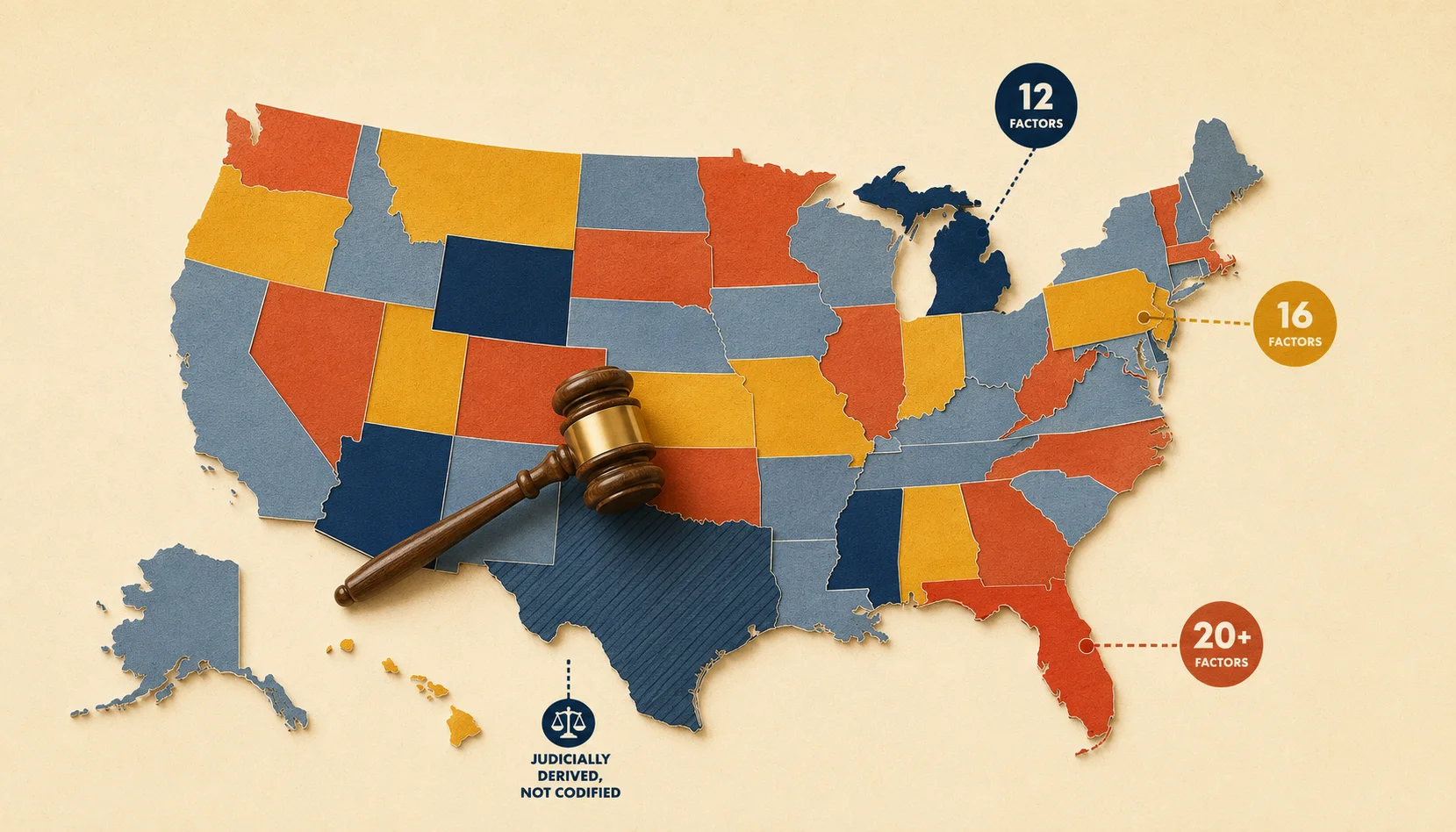
California appoints evaluators under Rule 5.220 — either side can request, the court orders, parents pick from an approved panel or stipulate to a private evaluator. Michigan operates under MCL §722.27 — the Friend of the Court handles many evaluations in-house.
Florida — Statute §61.13 — uses social investigators under Family Law Rule 12.363. Texas runs social studies under §107.109. New York under DRL §240 often uses Mental Health Service evaluators in the metro counties.
The takeaway — the procedural rules differ but the substantive playbook is similar. Ask your attorney early which appointment path your county prefers; that decision can shift the cost by $5,000+ and the timeline by 3–6 months.

The Child Custody Evaluation Process — Step by Step (Home Visits, Interviews, Report)
The custody evaluation process usually runs 8–16 weeks from order to report. A family court judge may order a custody evaluation at the first contested hearing — often when parents can't agree on custody — and either parent can also stipulate. Once the court appoints a child custody evaluator (most states require at least a master's degree, and most quality work is done by licensed psychologists), the evaluator schedules 4–8 hours of interviews with each parent, separate sessions with the children, and a home visit when practical.
Psychological testing comes next — the test battery covered above. The evaluator may add or drop instruments depending on the referral question. Collateral interviews — teachers, pediatricians, therapists, sometimes new partners — follow, and a competent evaluator maps family dynamics across both households before drafting. The evaluator must document each data source. Then the evaluator writes the evaluation report — sometimes called the custody evaluation report — and files it with the court (and counsel) ahead of trial.
The final product is a recommendation to the court covering legal and physical custody, parenting time, and — where relevant — custody and visitation conditions. The custody evaluator's recommendation focuses on the child's best interests and the child's needs; the judge isn't bound by it, but in many child custody cases the recommendation drives the eventual custody arrangement or custody agreement. The court may modify, accept, or reject the evaluator's findings, and your child custody attorney's job is to use cross-examination to surface anything in the report that doesn't line up with the underlying data.
How to prepare for a custody evaluation, in short: gather school records and medical records, line up 3–5 collateral references who actually know your child and family routines, and approach the evaluation as a structured interview, not a sales pitch. The custody evaluator must conduct a child custody evaluation under their state's rules — many states require an evaluator to have completed at least 10 court-ordered child custody evaluations under the supervision of a senior diplomate before conducting child custody evaluations independently. In any contested child custody or child custody dispute the court determine what custody arrangement is best for the child only after weighing the evaluation's findings and recommendations.
Either parent can request a custody evaluation; the court may order one on its own motion, or appoint a child custody evaluator from an approved panel. Allegations of abuse, joint custody and legal custody disputes, or relocation requests usually trigger an evaluation. Home visits are typical but not universal — in rural counties they're often replaced by extended phone interviews. The purpose of the evaluation is to give the court determine factual context so the family law group, parental rights, and the child's stability can be weighed together. The evaluator may also coordinate with school counselors and treating clinicians; an experienced family law attorney with experience in family law will help you understand which contacts are useful and which carry risk. The whole evaluation helps the judge — that's its only job.
Preparing for an evaluation matters more than most parents realize. An experienced child custody attorney can help you prepare and help parents prepare for the interview, the home visit, and the testing day. The evaluator will watch how you interact with the child or children, how you make a decision under stress, and your ability to provide structure and your ability to provide a safe home. In child custody proceedings, evaluations often turn on small observations — discuss it with your lawyer before the first session. The child custody evaluation process can run weeks; ensure that the evaluator gets a complete picture and that you protect your parental rights by documenting your routine throughout. Some parents hire a private evaluator (in addition to the court-appointed one) when conducting the evaluation independently would help the court determine the full picture.
Disclaimer
Made For Law is not a law firm and provides no legal advice. We're an editorial team and software provider. This article describes general practice in child custody evaluations as of 2026; statutes and procedures change. Consult a licensed family law attorney in your state before making decisions in a contested custody matter.
Disclaimer: This article is for general educational purposes only and does not constitute legal advice. Made For Law is not a law firm, and our team are not attorneys. We are not affiliated with any federal, state, county, or local government agency or court system. Content may be researched or drafted with AI assistance and is reviewed by our editorial team before publication. Laws change frequently — always verify information with official sources and consult a licensed attorney for advice specific to your situation. Full disclaimer
- Family Code §3111leginfo.legislature.ca.gov
- Rule of Court 5.220courts.ca.gov
- American Board of Professional Psychology (ABPP)abpp.org
- CRC 5.225 trainingcourts.ca.gov
- methodological critique of custody-eval practicelink.springer.com
- FRE 702law.cornell.edu
- MMPI-2 or MMPI-2-RFpearsonassessments.com
- Personality Assessment Inventory (PAI)parinc.com
- MCMI-IVpearsonassessments.com
- Raven's Standard Progressive Matricespearsonassessments.com
- APA Specialty Guidelines for Forensic Psychologyapa.org
- AFCC Model Standardsafccnet.org
- 2005 paperonlinelibrary.wiley.com
- Daubert v. Merrell Dow, 509 U.S. 579supreme.justia.com
- Reference Manual on Scientific Evidencefjc.gov
- Texas Family Code §107.109statutes.capitol.texas.gov
- MCL §722.27legislature.mi.gov
- Statute §61.13leg.state.fl.us
- DRL §240nysenate.gov

Our editorial team researches and summarizes publicly available legal information. We are not attorneys and do not provide legal advice. Every article is checked against current state statutes and official sources, but you should always consult a licensed attorney for guidance specific to your situation.