
What LinkedIn is good for (and what it isn't) for lawyers
Let's start with what LinkedIn actually delivers for attorneys, because most legal-marketing content on this topic dramatically overstates its lead-gen role.
LinkedIn is excellent for: building a referral network with CPAs, financial planners, other attorneys (cross-practice referrals), and corporate decision-makers. Maintaining visibility with prior clients. Establishing personal brand and authority in a specific practice area. Recruiting associates and staff. Researching opposing counsel before depositions.
LinkedIn is mediocre to bad for: direct consumer lead generation. Probate, family law, criminal defense, personal injury — the people who hire you for those cases are not on LinkedIn at 11 p.m. searching for an attorney. They're on Google, on social media, asking a friend. LinkedIn paid ads for consumer legal services run $80–$300+ CPLs at conversion rates that rarely pencil.
Read the rest of this guide with that framing — LinkedIn is a referral channel, not a lead-gen channel.
The profile setup that does most of the work
Profile beats activity by a wide margin on LinkedIn. A complete, well-optimized attorney profile receives 40x more profile views than an incomplete one (LinkedIn internal data). Six elements move the needle:
1. Professional headshot. Real photo, neutral background, head-and-shoulders, no team photos cropped down, no glamour shots. The headshot is the single biggest first-impression element. Budget $200–$400 for a local photographer and treat it as a 3-year investment.
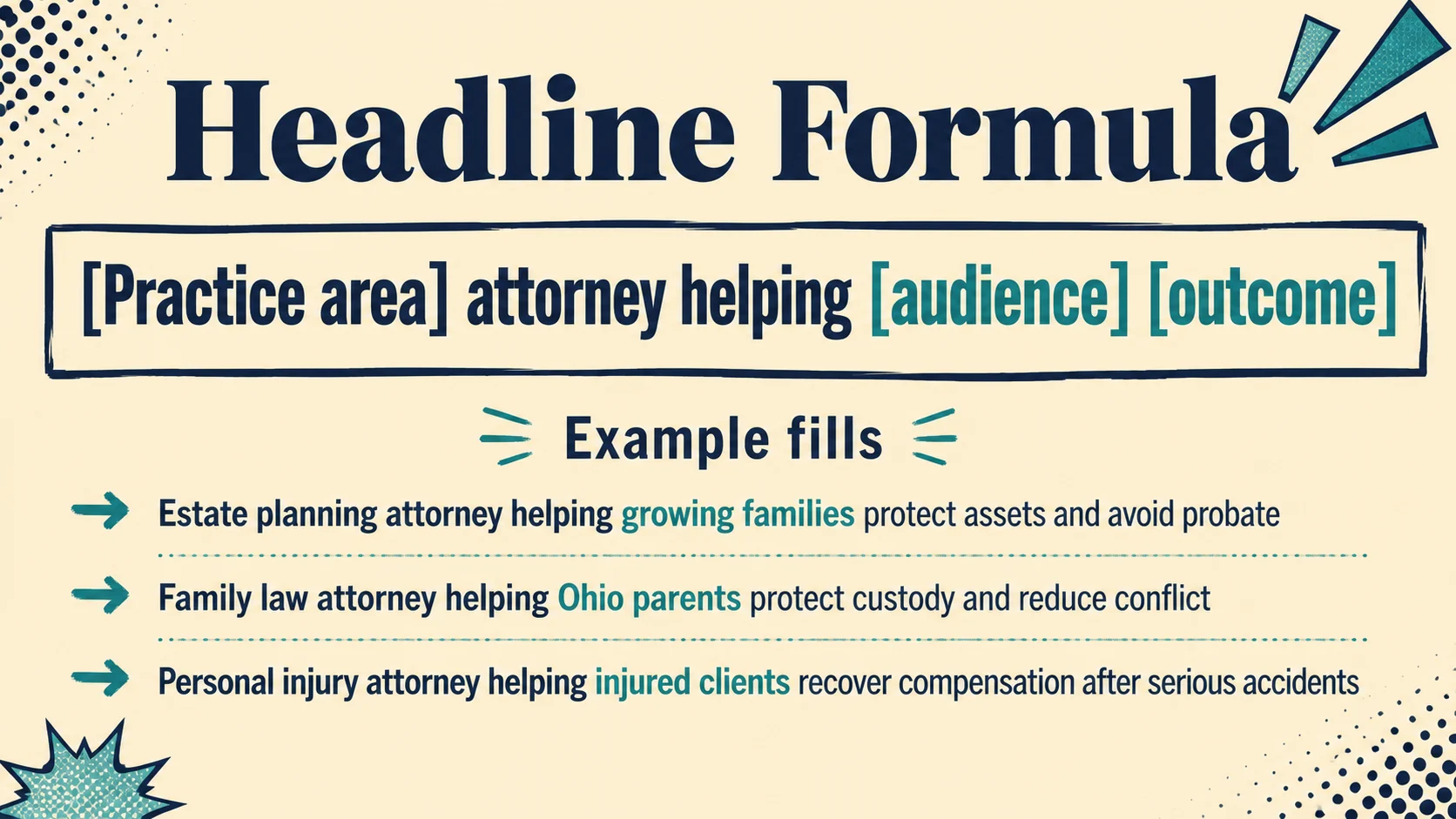
2. Headline that says what you do, not your title. "Probate Attorney | Helping Ohio Executors Navigate Estates `$50K–$5M"` outperforms "Attorney at Smith & Co." by 5–10x on profile views. Use the keyword someone would Google to find you.
3. About section — three paragraphs. Paragraph 1: what you do and who you help (specific practice area, specific clients). Paragraph 2: why you do it — credentials, experience, a quick story. Paragraph 3: how to get in touch (calendar link, phone, email). No corporate-speak. No "results-driven team." Talk like a human.
4. Featured section. Pin 3 things: a case study or article, a calculator/tool link (e.g., your firm's free probate calculator), and a way to book a consult. The Featured section is the second-most-clicked area of any LinkedIn profile after the headline.
5. Experience entries with detail. Each role should have a 3–5 sentence description, not just a title. Practice areas, types of cases, sample matters (anonymized).
6. Recommendations. Three to five strong recommendations from former clients (where bar rules permit), referral partners, and colleagues. They're the social proof that closes profile visitors.
Content strategy — what to post and how often
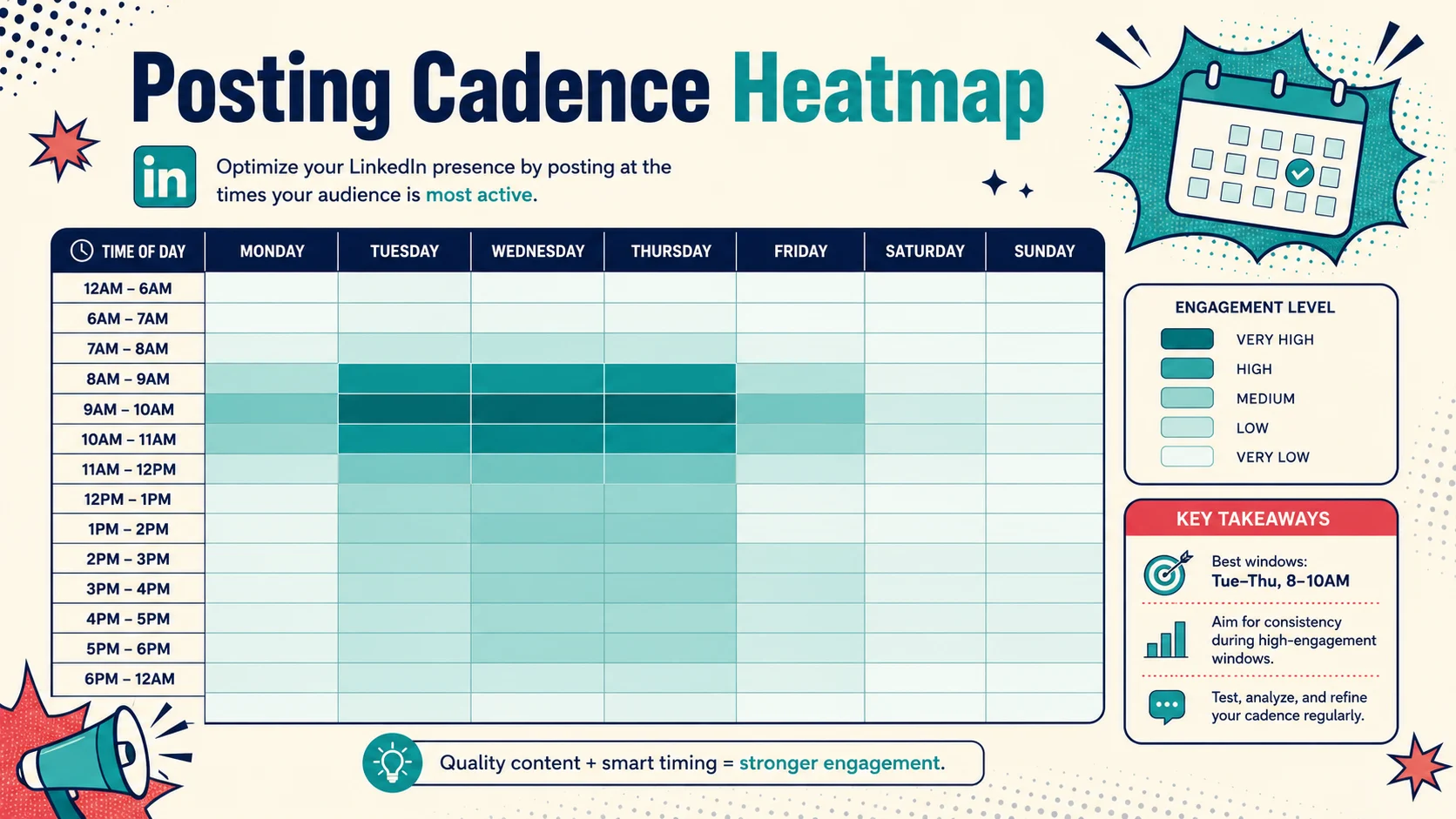
Posting cadence for solo and small firm attorneys: 2–3 posts per week, mixed across three content types:
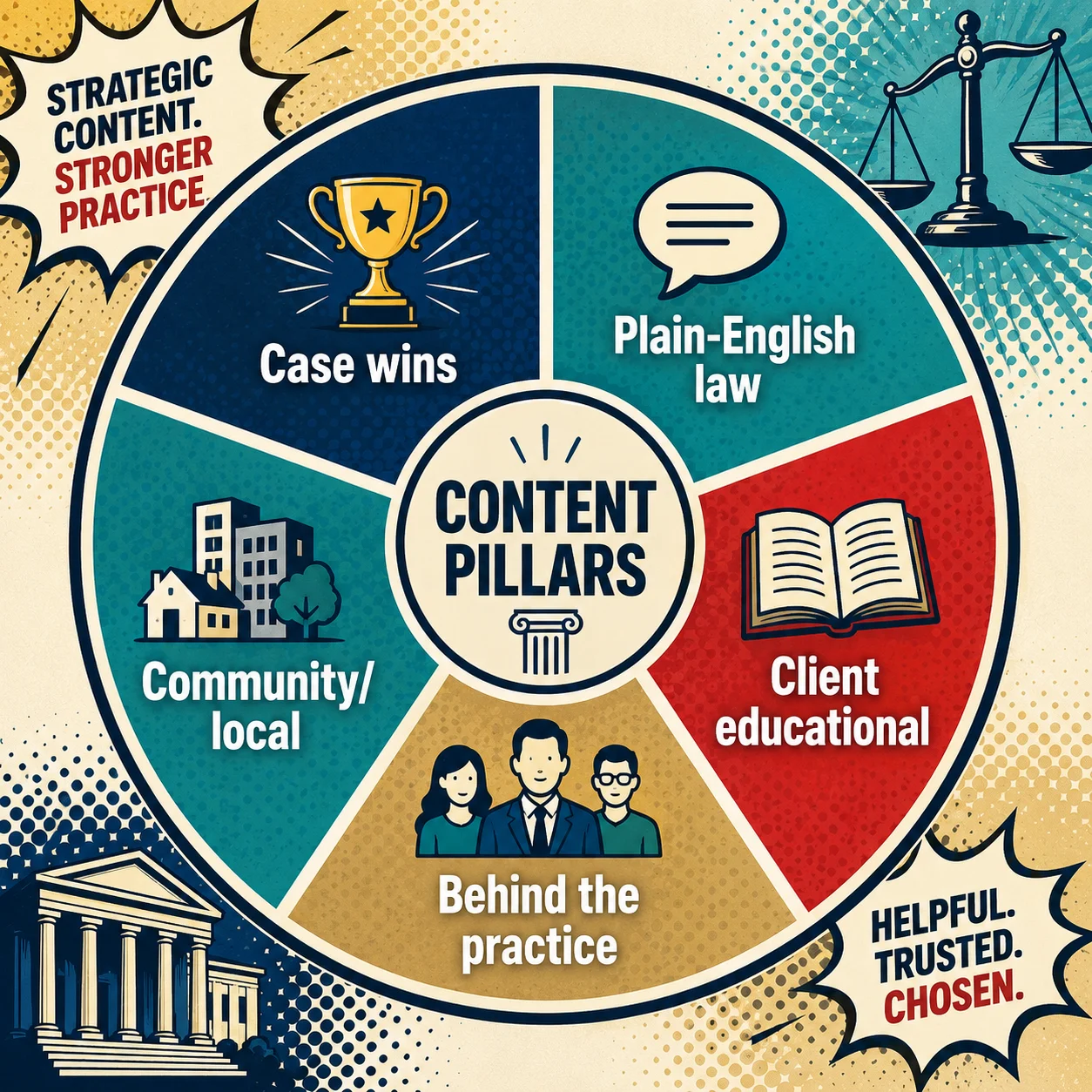
Type 1 — Practice-area education (50% of posts). "Three things every Ohio executor should do in the first 30 days." "Why 'just file a small estate affidavit' isn't always the right move." "What the new federal estate tax exemption means for $5M+ estates." These posts establish authority and rank you as a topic expert in your network's eyes.
Type 2 — Behind-the-scenes / personal (30% of posts). Why you got into probate law. A weird case (anonymized, no client detail). A book you read on grief and estate planning. The human posts perform 2–3x the engagement of pure tactical content on LinkedIn because they remind the network that there's a person behind the credentials.
Type 3 — Network amplification (20% of posts). Tag referral partners — "CPA Sarah Chen at Chen & Associates just shared this great piece on estate tax timing — worth a read for anyone with `$5M+` estates." Reposting and tagging is the social currency that earns reciprocity. Most solo attorneys never do this and miss the easiest LinkedIn ROI on the platform.
What format actually performs in 2026
LinkedIn's algorithm has shifted significantly over the last two years. What works as of 2026:
- Text posts (1–3 short paragraphs) — still the highest-engagement format. Hook in line 1, payoff in lines 2–3, no fluff.
- Carousels / PDF posts (5–10 slides) — second-best format. "5 Probate Mistakes Executors Make" as a 6-slide carousel outperforms the same content as a text post by 2–3x reach.
- Native video (30–90 seconds) — works if you're comfortable on camera. Vertical 9:16 outperforms horizontal on mobile feed.
- External link posts — punished by the algorithm. If you must share a link, drop it in a comment, not the post body.
Engagement on LinkedIn comes from comments, not likes. A post with 5 thoughtful comments will outperform a post with 50 likes in the algorithm. Reply to every comment within the first 2 hours of posting — that compounds reach significantly.
DM strategy — the part most attorneys skip
Posts build awareness. DMs build referral relationships. Three DM patterns that work:
- Quarterly check-in with referral partners. A 1-line message every 90 days to each CPA, financial planner, and partner attorney. "Hey Sarah — saw your post on the new IRA rules. How's Q2 looking? Estate planning side still busy?" That's it. The point is to stay in the inbox, not to sell.
- Welcome message to new connections. Auto-personalized 2-line message: "Thanks for connecting, [name] — saw you're in [city]. I work mostly on [practice area]. Happy to be a resource if probate ever comes up for one of your clients." No sales pitch. Just visibility.
- Response to engagement. When someone comments on your post, send them a quick DM thanking them and asking a question about their practice. Half won't respond. The other half become real conversations.
What not to do: cold pitching strangers, mass-messaging "would love to connect and chat about your legal needs" notes, or running automated outreach tools. LinkedIn polices these aggressively and the response rate is brutal even when it works.
LinkedIn paid ads — when (and when not) to spend
Skip LinkedIn paid for consumer-facing legal services. CPLs run $80–$300+, targeting is too noisy for "recent divorce filer" or "executor of estate," and the audience isn't shopping for an attorney on LinkedIn anyway.
LinkedIn paid only pencils for B2B legal — corporate, IP, M&A, employment defense, immigration, regulatory. Where the buyer is an in-house counsel, an HR director, or a CFO, LinkedIn's professional targeting works. Even there, the most efficient format is Sponsored Content + Lead Gen Forms (forms pre-fill from the user's profile, dropping form-friction).
Budget for B2B LinkedIn ads: minimum `$1,500–$3,000/month` to gather enough data for the algorithm to optimize. Lower than that and you're paying for noise.
Tracking LinkedIn ROI as a referral channel
Because LinkedIn isn't primarily a direct lead-gen channel, traditional CPL tracking misses most of its value. Two better metrics:
- Referral pipeline. Track how many of your incoming referrals from CPAs, planners, and other attorneys are from people you maintain visibility with on LinkedIn. The compounding effect over 12–24 months is usually where LinkedIn's ROI shows up.
- Profile-view to consult-booking funnel. Visits → connection requests sent → DMs → consult bookings. Sales tools like Shield or LinkedIn's own Creator Analytics surface this; even Google Analytics with UTM tags on your profile's Featured link captures the consult-booking step.
LinkedIn rewards consistency more than perfection. Two posts a week for 18 months will outperform 10 posts a week for 6 weeks every time. The patience is the strategy.

Becoming a thought leader without sounding like one
The phrase "thought leader" makes most attorneys cringe — and rightly so, because the LinkedIn version is usually performative. Here's the thing: real thought leadership on LinkedIn for lawyers is just consistent public reasoning about legal concepts your clients actually face.
Pick three subtopics inside your practice area and own them publicly for 12 months. A probate attorney might own: small-estate procedures, executor fee disputes, and ancillary probate across state lines. Every post, every comment, every share — funnels back into those three columns. The LinkedIn algorithm rewards topical depth; your network starts to associate your name with those questions; referral partners send the matching matters your way.
Tactics that work for building this kind of LinkedIn presence:
- Share content from credible sources with a 2–3 sentence take of your own. A new ABA Journal piece, an updated state statute, a court ruling — your commentary is the value-add, not the link itself.
- Write LinkedIn articles (long-form, 800–1500 words) once a quarter. Articles surface in search results inside LinkedIn and outside it on Google. They're a slower play than posts but they age better.
- Comment on other attorneys' and CPAs' posts. Substantive comments — 2–3 sentences with a real perspective — get more profile traffic than your own posts in most weeks. Comments are the most underused LinkedIn activity for solo lawyers.
Should you join LinkedIn Groups in 2026?
LinkedIn Groups peaked in 2014 and have been on a slow decline ever since. Most general-interest groups are now spam graveyards — not worth your time. That said, two narrow exceptions exist for attorneys.
Practice-area specific groups with strict moderation — bar association alumni groups, niche estate-planning groups, in-house counsel networks — can still be genuinely useful for staying current on practice-area changes and finding referral partners. Look for groups under 5,000 members where the moderator visibly enforces rules. Anything bigger is usually noise.
Local bar association groups are worth joining and reading, even if you rarely post. They're where local CPAs, financial planners, and other attorneys hang out, and a thoughtful comment in a local group is one of the easiest ways to start a referral conversation without cold-pitching.
The American Bar Association's legal technology survey angle
The American Bar Association's Legal Technology Survey Report (TechReport) tracks how solo and small-firm attorneys use technology and marketing channels year over year. LinkedIn consistently ranks as the top professional network used by lawyers, ahead of every other social platform combined. That's the data point most LinkedIn marketing for lawyers articles bury.
What the survey doesn't capture: how legal professionals actually convert LinkedIn presence into matters. The honest answer is that LinkedIn is a multi-quarter compounding investment, not a same-week lead source. Attorneys who report meaningful ROI from LinkedIn are the ones who treated it as a 24-month commitment, not a 90-day test.
Pair the LinkedIn work with a public-tools surface — say, an embedded probate calculator on your firm site — and the LinkedIn-driven referral traffic has somewhere to convert. Without that conversion surface, LinkedIn just builds awareness; with it, LinkedIn becomes part of a real intake funnel for the law firm.
Best practices for LinkedIn content that builds trust
A consistent LinkedIn content strategy is what separates a dormant profile from one that compounds. Best practices for LinkedIn content aren't complicated, but they do require discipline:
- Speak to your target audience, not to the platform at large. Your potential clients, referral sources, and other legal professionals in adjacent practice areas are your audience. Generic "I love being an attorney" posts reach nobody well; specific case studies and practice-area education reach the right people deeply.
- Build trust before pitching. Posts that share a real lesson, a real number, or a real (anonymized) case build trust over months. The audience that builds relationships with you on the platform converts to consult requests at meaningful rates 6–18 months later. That's the marketing strategy that pays.
- Update your profile quarterly. Headline, About section, Featured links, professional headshot — the profile is the landing page every post drives toward. A stale profile undermines every post.
- Track who's viewing your profile. The "who's viewing your profile" feature surfaces warm referral opportunities — opposing counsel checking you before a deposition, a CPA you mentioned in a post, an in-house attorney from a potential client. Reply with a relevant DM and that's a referral conversation that didn't exist yesterday.
A profile executed steadily for 18 months puts a solo lawyer ahead of 90% of the legal industry on professional reputation signals — and that's the bar that drives real business development.
Digital marketing for law firm growth — where LinkedIn fits
Digital marketing for law firm growth is a stacked-channel game, and the platform we're discussing is one of several channels — important, but not the only one. For lawyers and law firms building a comprehensive marketing strategy, here's where it fits:
- Organic search (40–60% of long-run lead volume). Local SEO, calculator-driven pages, deep FAQ content. Slow to start, compounds for years.
- Referral pipeline from professional networks (20–35%). CPAs, financial planners, partner lawyers, and other legal professionals you stay visible to. This is where LinkedIn pays — not as direct lead-gen, but as a trust and visibility layer for the referral pipeline.
- Paid search ads (5–20%). Google Search Ads on high-intent queries during the SEO ramp.
- Sponsored content + native advertising on professional networks (0–10%). Only pencils for B2B legal — corporate, IP, M&A, employment defense. Not for consumer-facing work.
Digital marketing for a law firm isn't a single-channel bet. The lawyers and law firms that scale durably treat each channel as part of one integrated marketing strategy — with the platform under discussion playing the trust-and-visibility role inside the referral lane.
Putting it together — a 90-day plan to build trust on the platform
If you want a concrete 90-day plan to use LinkedIn for lawyers and build trust at the same time, here it is:
- Days 1–14. Optimize your profile end-to-end. Real headshot. Headline naming your practice area + service area. About section with 3 paragraphs of human language. Featured section pinning a calculator link (Made For Law's free probate calculator is the embeddable example), a case study, and a consult booking link. Confirm credibility signals — bar admission, years of experience, recommendations from past clients where bar rules permit.
- Days 15–60. Post 2–3 times a week. Each post follows the format from earlier in this guide. Comment substantively on 5 posts from referral partners (CPAs, planners, partner attorneys, in-house lawyers) per week. Reply to every DM within 24 hours.
- Days 61–90. Add one quarterly long-form article (800–1500 words on a topic the firm uniquely understands). Begin a structured DM check-in cadence with referral sources every 90 days. Audit profile views and connection requests; identify three warm prospects and reach out with relevant, non-pitchy notes.
A 90-day cadence like this builds a content strategy that compounds. By month 6, the LinkedIn presence is reinforcing the referral pipeline and feeding consult requests at meaningful rates. By month 12, the platform becomes the second-largest channel after organic search for most solo and small-firm practices that execute the plan.
Disclaimer: This article is for general educational purposes only and does not constitute legal advice. Made For Law is not a law firm, and our team are not attorneys. We are not affiliated with any federal, state, county, or local government agency or court system. Content may be researched or drafted with AI assistance and is reviewed by our editorial team before publication. Laws change frequently — always verify information with official sources and consult a licensed attorney for advice specific to your situation. Full disclaimer

Alex Tarlescu is co-founder of Made For Law — the SaaS platform that gives attorneys embeddable legal calculators with built-in lead capture. He's also co-founder of Good Smart Idea, the sister marketing agency that handles broader marketing engagements for law firms. Based in Cleveland with nearly 20 years of experience in sales, digital marketing, and AI automation, he writes about marketing — not legal advice — and the systems that turn website visitors into signed clients.